Throughout 2026 my main job was a project in Switzerland called “Explore 3D”, which led me to discover and take part in the field of 3D digitization in the Humanities and for GLAM (Galleries, Libraries, Archives, Museums) and cultural heritage.
- 3D Digitization for the Humanities, GLAM and Cultural Heritage
- Explore 3D
- CIPA Armenia
- LSBA Professional Certificate in 3D Modeling for Cultural Heritage
3D Digitization – Humanities, GLAM and Cultural Heritage
In the past two decades, the field of 3D digitization has become increasingly important and dynamic for the Humanities, GLAM (Galleries, Libraries, Archives, Museums) and cultural heritage. It is now a major resource for conservation, research, education, and public engagement. To mention one powerful example, the Collart-Palmyre Project – led by Patrick Michel at the University of Lausanne – has used a photographic archive (from Swiss archaeologist Paul Collart) to digitally reconstruct the Baalshamîn temple, which was destroyed by Da’esh (the Islamic State/ISIS) in 2015 during their capture/occupation of Palmyra. This case highlights not only the scientific but cultural and social relevance of 3D digitization, both for the global community and locals (Syrians here).
3D digitization relies on photographic (ambient light/camera), laser (controlled light source) or X-ray signals to capture the required data for reproducing the object/building/site digitally. The processing, rendering and publishing/viewing is then done through specialised software or platforms/apps. Throughout the past few decades, 3D digitisation technologies have therefore developed rapidly through advances in digital imaging, sensors, computing, and more recently machine learning.
Researching and documenting cultural heritage through 3D becomes ever more important in the face of wars, climate change, environmental disasters or accidents, which threaten their very existence.
Explore 3D
This year I had the opportunity to get familiar with and contribute to this field as part of my job within Explore 3D, a national project funded by swissuniversities and carried out jointly by the University of Lausanne, the University of Geneva, the EPFL, the ETHZ and DaSCH. The purpose of the project was to advance FAIR data management and ORD practices for 3D data in the humanities in Switzerland. This involved developing guidelines, testing a 3D sharing platform based on SketchNote 3D, and launching a network of 3D practitioners across Swiss universities.
My role was creating a best practices guide for researchers who want to use 3D digitisation and modelling as part of their work. For this I carried out interviews with such 3D practitioners, especially archeologists and historians in Lausanne and Geneva, and I collaborated with Christian Felsner who was working at the ETHZ library. His expertise was centered especially on the technical and practical aspects of 3D digitisation, while my main contribution was about FAIR principles, documentation and data management.
Together, we built a general assessment and planning framework that guides researchers through the necessary considerations and decisions when starting a 3D digitisation project. We also outlined the various technologies and the software, as well as the limitations and challenges of each approach. There is also a complete use case showing how the process looks in practice from start to finish. In September, Christian presented our work during the FAIR 3D Heritage Conference in Mainz (Germany).
CIPA Armenia
From June 19 to 25 I attended the 2026 CIPA Summer School “Documentation, Monitoring, and Multiband Recording of Cultural Heritage”, held in Byurakan, Armenia. It was organized by CIPA Heritage Documentation in collaboration with ICOMOS Armenia.
CIPA Heritage Documentation is an NGO which is part of ICOMOS (International Council on Monuments and Sites), and “endeavours to transfer technology from the measurement and visualisation sciences to the disciplines of cultural heritage recording, conservation and documentation”.
The first day involved a series of theoretical courses on photogrammetry, geodesy, laser scanning and multiband photography. Then we spend a whole day at the St. Hovannes church (which was created in the 10th century), collecting data and observing how documentation for a real historical site/monument is carried out. The next two days were dedicated to data processing, using mainly Agisoft Metashape (photogrammetry) and Cloud Compare (laser scanner data). We had to work as groups and at the end each group made a presentation explaining the whole process and our takeaways.
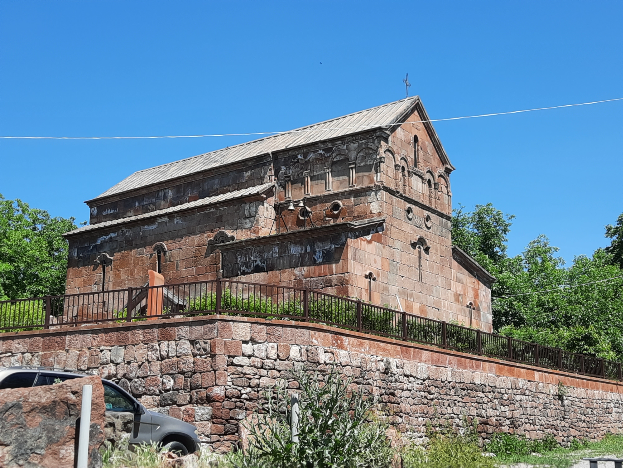
My group focused on the Western façade, and below are the 3D models we made during the summer school, using photogrammetry and laser data.
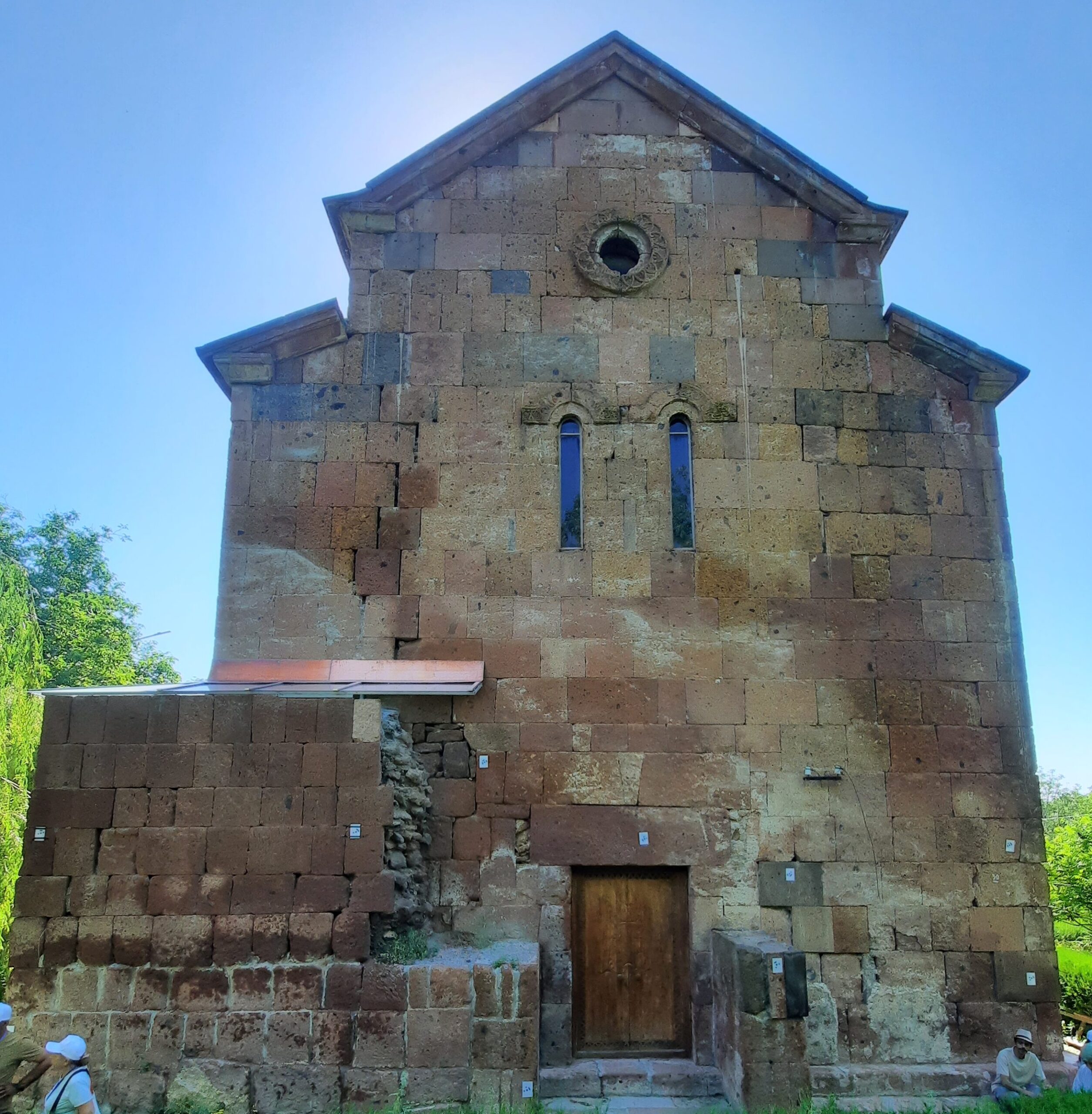
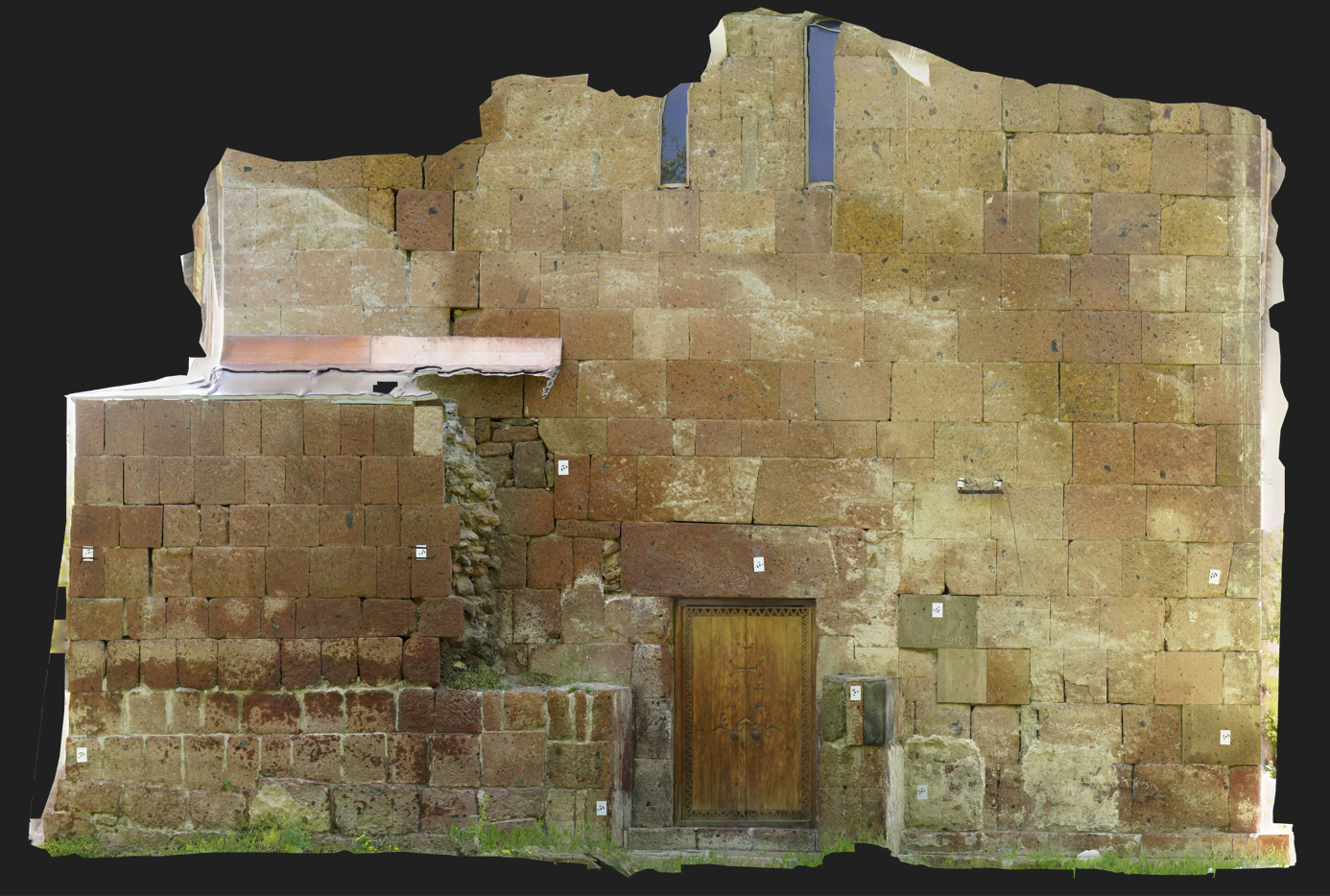
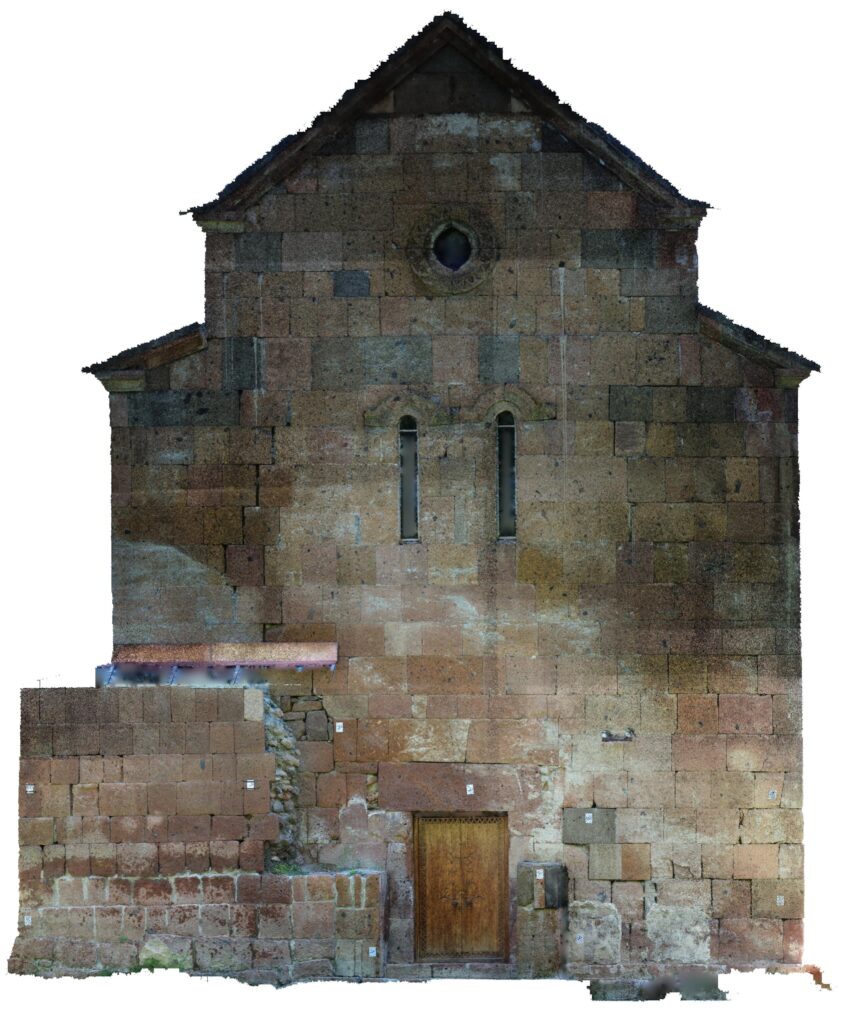
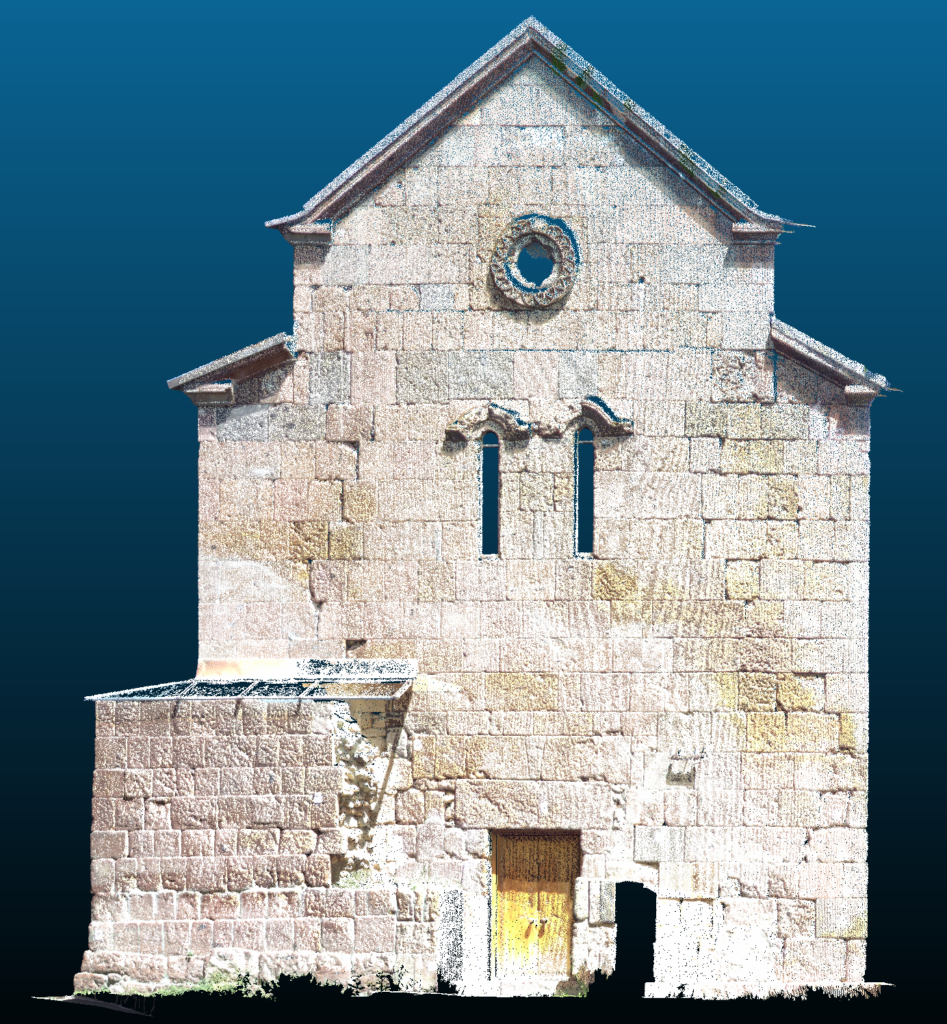
This experience was helpful for me to get a better handle on the workflow, concepts and challenges of 3D digitization especially for monuments/buildings, whereas with Explore 3D and Christian Felsner (then at the EZH library) I had mostly been introduced to photogrammetry for (smaller) objects. Also, this enabled me to move from a theoretical understanding to a more hands-on and practical experience, which was important!
LSBA Professional Certificate in 3D Modeling for Cultural Heritage
Lastly, in Autumn I completed London School of Business and Administration’s Professional Certificate in 3D Modeling for Cultural Heritage. This helped me deepen and consolidate my knowledge of 3D digitization and modelling.
I look forward to participating in this field in the future.
 Alexandre Bovey